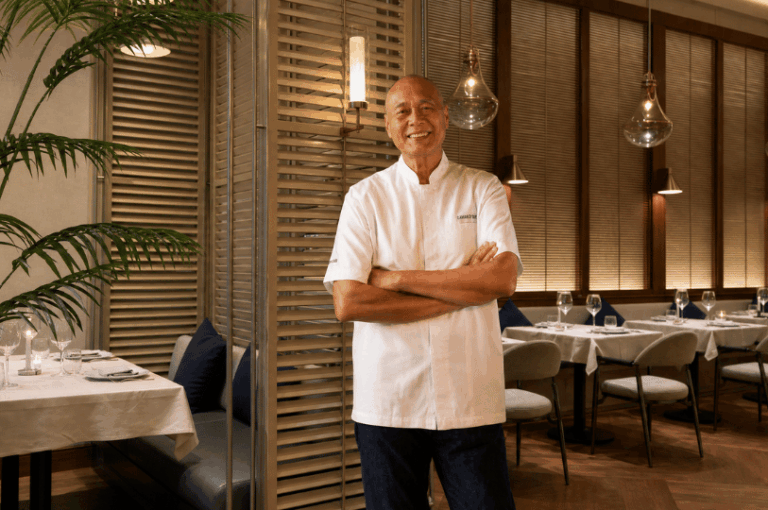
Why Rishi Naleendra Wants Fine Dining to Feel Like Coming Home

There is a moment in some fine dining restaurants when you become very aware that you are in a fine dining restaurant.
The room quietens. A plate arrives looking almost too precise to disturb. Someone explains several components with impressive accuracy, and you suddenly wonder whether you are sitting correctly.
Cloudstreet seems interested in a different feeling.
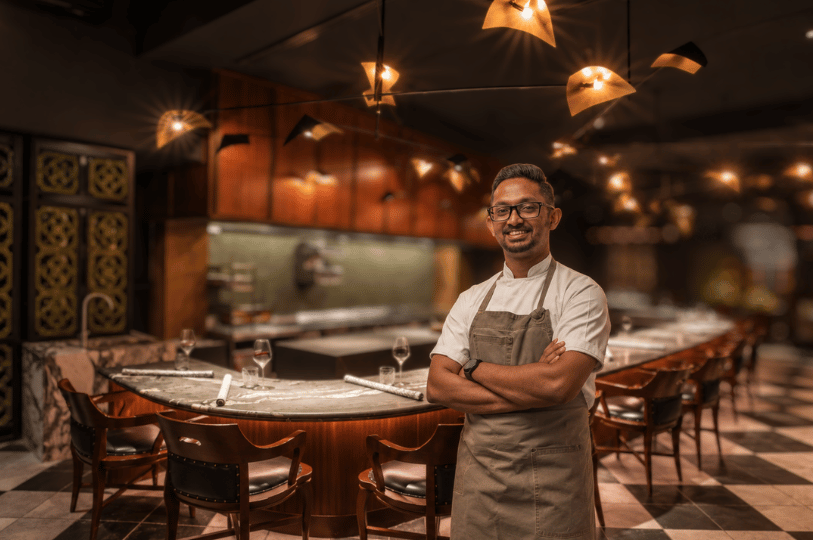
Chef-owner Rishi Naleendra built the restaurant around warmth as much as food. Its chef’s counter was designed to bring diners closer to the kitchen, while the restaurant describes its ideal arrival as something like stepping into a best friend’s home.
That sounds simple until you consider what fine dining usually asks of us.
There is ceremony here, certainly. Cloudstreet currently serves tasting menus that can stretch across several hours, with dishes moving between Naleendra’s Sri Lankan heritage, his years in Australia and the ingredients that interest him now. But the experience is not supposed to make you feel like you are observing excellence from a safe distance.
You are meant to feel part of the room.
Perhaps that explains the counter. Watching chefs work changes the rhythm of dinner. You notice hands passing plates, conversations beginning and dishes taking shape just metres away. The invisible wall between kitchen and guest becomes thinner.
And then there is the restaurant itself.
Naleendra has said that his work has often felt like home, partly because he spent years living in different places. When designing Cloudstreet, he wanted its spaces to feel collected rather than clinically coordinated: old furniture, different textures, objects with personality and areas that do not all look the same.
There is something charming about that idea.
Homes rarely match perfectly. They accumulate.
A chair comes from one chapter. A painting belongs to another. Something slightly strange stays because somebody loves it. Cloudstreet’s maximalist interiors work in much the same way, and that sense of personality softens the formality of the meal.
It reminded me of something I once read on Best Dining Guide: the meals that stay with us are not always the most elaborate, but the ones that made us feel genuinely at ease.
That matters because Naleendra’s cooking is deeply personal too. His food now openly draws from Sri Lankan flavours alongside the ingredient-led cooking he developed in Australia. His Sri Lankan curry of marron, for instance, brings curry spices, aromatics and coconut into a distinctly contemporary restaurant setting.
But personal food needs personal hospitality.
Otherwise, the story stops at the plate.
Cloudstreet seems to understand that hospitality is not merely the choreography surrounding dinner. It is part of what dinner tastes like. A conversation at the counter, the energy of an open kitchen, moving upstairs for something sweet, or simply feeling that nobody is rushing you through the evening can change how a meal settles into memory.
Perhaps that is what coming home means here.
Not familiarity in the literal sense. Not slippers and leftovers.
Just the rare feeling that somewhere this polished still wants you to relax, stay awhile and belong.