Hokkien Mee Stalls in Singapore We’d Happily Eat Again

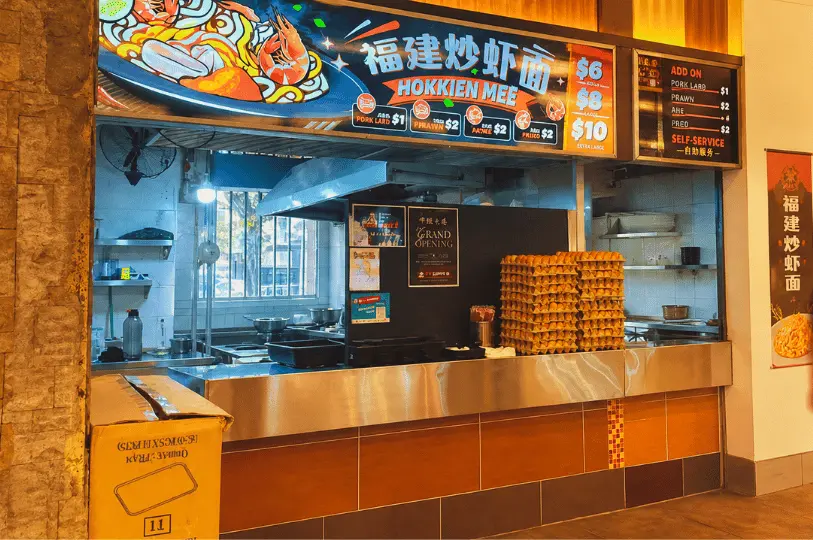
The wok clangs. A ladle of stock hits the noodles, and for a second the whole stall disappears behind a cloud of steam. Someone in the queue checks their phone. Someone else just watches.
Then the plate arrives. It might be glossy and almost soupy. It might be dry, the stock soaked deep into every strand. It might carry the faint smoke of a charcoal fire.
That’s the thing about Hokkien mee in Singapore. Everyone agrees it’s worth queuing for. Almost nobody agrees on what it should look like.
The Hokkien Mee Stalls to Start With
This won’t crown the best Hokkien mee in Singapore. That plate doesn’t exist, or rather, it exists six different ways depending on who’s holding the fork.
What we’ve done instead is gather six stalls that each do something distinct, so you can match the plate to the way you actually like the dish. Which is probably why eating your way through Singapore never gets boring.Which is probably why eating your way through Singapore never gets boring.
Hong Heng Fried Sotong Prawn Mee — Tiong Bahru Market & Food Centre, 30 Seng Poh Road, #02-01
Nam Sing Hokkien Fried Mee — Old Airport Road Food Centre, 51 Old Airport Road, #01-32
Swee Guan Hokkien Mee — 5 Lorong 29 Geylang, Singapore 388060 (Sing Lian Eating House)
Singapore Fried Hokkien Mee — Whampoa Makan Place, #01-32/33, 90/91 Whampoa Drive
Hainan Fried Hokkien Prawn Mee — Golden Mile Food Centre, 505 Beach Road, #B1-34
Xiao Di Fried Prawn Noodle — Guan Hock Tiong Eating House, 153 Serangoon North Avenue 1, #01-512
1. Hong Heng Fried Sotong Prawn Mee: A Lighter, Seafood-Forward Take
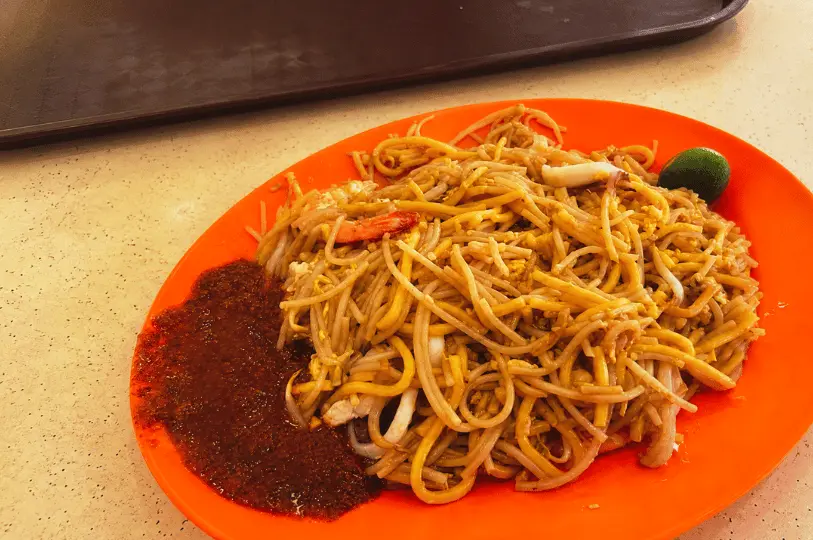
Where to find it: Tiong Bahru Market & Food Centre, 30 Seng Poh Road, #02-01, Singapore 168898
What to budget: Around S$5 to S$7, with a standard plate recorded at about S$5 in September 2026
If you want to understand fried Hokkien mee without being pulled to either extreme, Hong Heng is a sensible place to start.
Each plate is prepared to order with yellow noodles and bee hoon, prawns, squid, and sliced fish. The MICHELIN Guide singles out the homemade chilli sauce. The stall was included in Singapore’s 2026 Bib Gourmand selection, and current reporting identifies it as one of the few to have kept that recognition across all ten Singapore editions since 2016. That’s a decade of consistency, which is no small thing in a city with strong opinions about noodles.
The prawns and sotong keep the plate feeling fresh, while the wok hei comes through without taking over. The noodles still have some bite, and the overall flavour stays balanced rather than especially heavy or rich. The queue also tends to move at a decent pace, which always helps.
You’ll like this if…
Breakfast or lunch, solo diners, and anyone on a Tiong Bahru food crawl who wants a recognized heritage stall where the seafood stays noticeable.
The trade-off
I find the seasoning on the lighter side, and the wok hei does not come through as strongly as it does at some other stalls. The chilli is fairly restrained too, so this may not be the plate for you if you want something especially punchy. I’d also factor in a possible 10- to 20-minute wait during busy periods. Hours are Tuesday to Saturday, 10:30am to 2:30pm, closed Sunday and Monday. In other words, this is very much a daytime stop rather than a dinner option.
One thing I’d do
Don’t leave it to the last stretch of lunch service, because current guides say the stall can finish early when demand is high. Once you’re seated at the table, use the house chilli and a squeeze of calamansi if the plate feels mild.
2. Nam Sing Hokkien Fried Mee: Dry Style at Airport Road Food Centre
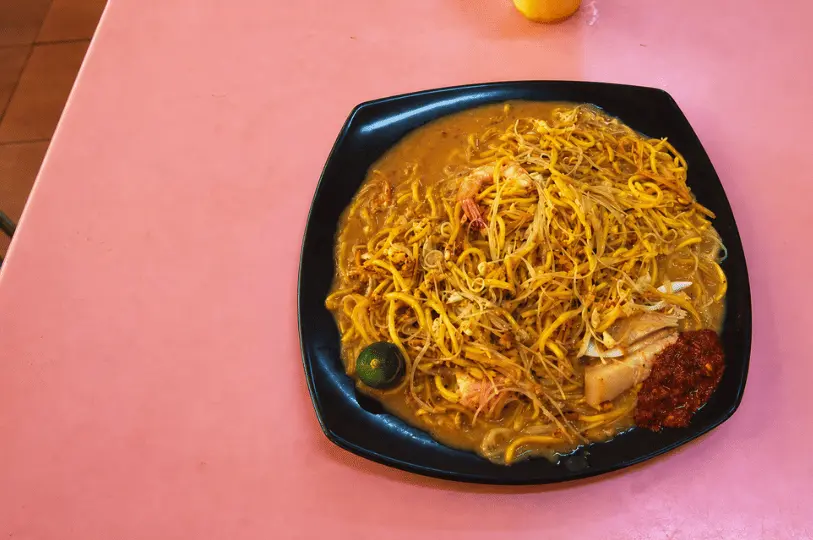
Where to find it: Old Airport Road Food Centre, 51 Old Airport Road, #01-32, Singapore 390051
What to budget: About S$5 and S$8
Nam Sing opened in 1960 and has focused on essentially one thing ever since: Hokkien fried mee with prawns.
The yellow egg noodles and rice vermicelli are cooked in a broth made from prawn shells and pork bones, but what stands out to me most is how dry the finished plate is. The stock clings to the noodles instead of pooling underneath them, giving Nam Sing a very different character from the wetter versions around Singapore. The finer bee hoon, chopped red chilli, and noticeable egginess keep the plate feeling old-school without piling on too many rich extras.
I like that the noodles still feel well coated despite the drier style, while the squid stays springy and the prawns bring a cleaner sweetness. There is something distinctly nostalgic about the whole plate too. It tastes like a version of Hokkien mee that has not been pushed to become wetter, richer, or more extravagant just to keep up with newer styles.
You’ll like this if…
Dry-style fans, people who dislike soupy noodles, lunch on an Old Airport Road food crawl, and diners curious about long-running hawker traditions.
The trade-off
This is where the dry style may divide people. The stock is gentler and the overall plate less rich than wetter versions of Hokkien mee, while the portion can feel modest if you arrive properly hungry. A 30- to 45-minute wait is also possible when the queue builds. The MICHELIN Guide lists the stall as open Tuesday to Sunday, 10am to 6pm, with Monday closed, although newer listings show some Wednesday closures and earlier finishes around 4:30pm. It is worth checking the current schedule before making a special trip.
One thing I’d do
If you’re hungry, go for the S$8 plate. The S$5 serving can feel a little small if you’re especially hungry, so the S$8 plate makes more sense for a fuller meal. More importantly, come expecting a dry style of Hokkien mee. Comparing it directly with a wet, almost soupy version misses what Nam Sing is trying to do.
3. Swee Guan Hokkien Mee at Geylang Lorong: The One to Try for Charcoal Smoke
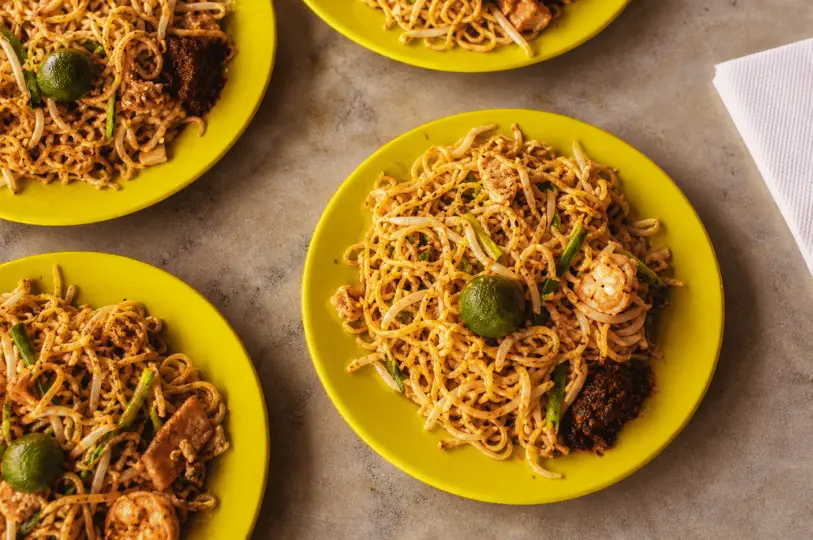
Where to find it: 5 Lorong 29 Geylang, Singapore 388060 (some sources refer to the premises as Sing Lian Eating House)
Getting there: Aljunied MRT, about a 6 to 7 minute walk
What to budget: Around S$8, S$10, and S$15
If one stall on this list explains why charcoal matters, it’s this one.
Swee Guan dates back to 1968 and is now associated with second-generation cooking. Its defining feature is simple to describe and slow to do: the noodles are still fried over a charcoal fire rather than relying purely on gas. That adds a smoky character to both the noodles and the stock. It’s a real cooking method, not just a reputation.
The wok hei comes through clearly here, backed by that unmistakable smoky aroma from the charcoal fire. The stock coats the noodles without leaving them soggy, while fresh prawns, squid, and a spicy sambal round out the plate. If the way Hokkien mee is cooked matters just as much as what lands on top, Swee Guan makes a convincing case for the trip to Geylang Lor.
You’ll like this if…
Wok hei chasers, food enthusiasts, casual dinners, solo diners or small groups, and anyone on a heritage-food trip.
The trade-off
The slower pace makes sense when each batch is worked over charcoal, but it is worth factoring into the visit. Hours are roughly 4pm to 10pm, Thursday to Tuesday, with Wednesday closed. Parking can also be tight in the evening, so coming by MRT is often the easier move.
One thing I’d do
Arrive before about 5pm to dodge the worst of the dinner rush. And order for the smoke, not the prawn count. That charcoal-fired character is the whole reason to come.
4. Singapore Fried Hokkien Mee: A Wet-Style Fix That Runs Late
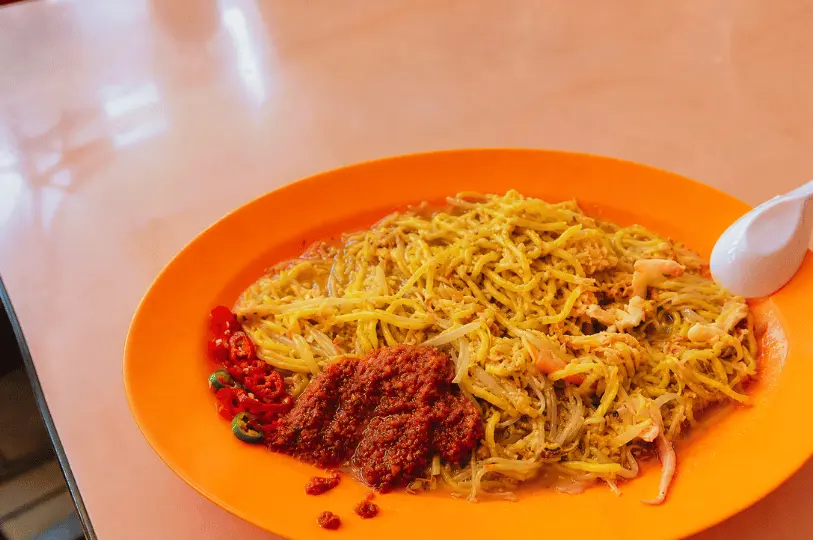
Where to find it: Whampoa Makan Place, #01-32/33, 90/91 Whampoa Drive, Singapore 320091
What to budget: Six portion sizes, from about S$5 to S$15
Most of the stalls here are done by mid-afternoon. This one is just getting started.
Singapore Fried Hokkien Mee serves until 11:30pm on most days it opens, which solves a very specific problem: wanting Hokkien mee after dark. The MICHELIN Guide describes rice vermicelli and yellow egg noodles sautéed with prawns and squid, and it lists the stall under street food. The plate leans wet and moist, which makes it a useful contrast to the dry-style stalls above.
The noodles stay moist and soft, with enough seafood to make the plate feel substantial. The late opening hours help too, especially when the craving hits after most Hokkien mee stalls have already packed up.
You’ll like this if…
Dinner and supper, groups exploring Whampoa food, and diners who prefer a wetter Hokkien mee.
The trade-off
The wok hei is more restrained here, and the prawn stock leans milder than deeply rich or smoky. That makes it a better fit for diners who prefer a softer, wetter plate rather than something intensely charred. A queue is still worth expecting. Hours are 3:30pm to 11:30pm on Monday to Wednesday and Friday, 2pm to 11:30pm on Saturday and Sunday, and closed Thursday.
One thing I’d do
If crispy pork lard is part of your ideal plate, ask whether it is available. It is not always a prominent part of the standard serving.
5. Hainan Fried Hokkien Prawn Mee: Dry Noodles With Sambal, Chilli and Calamansi
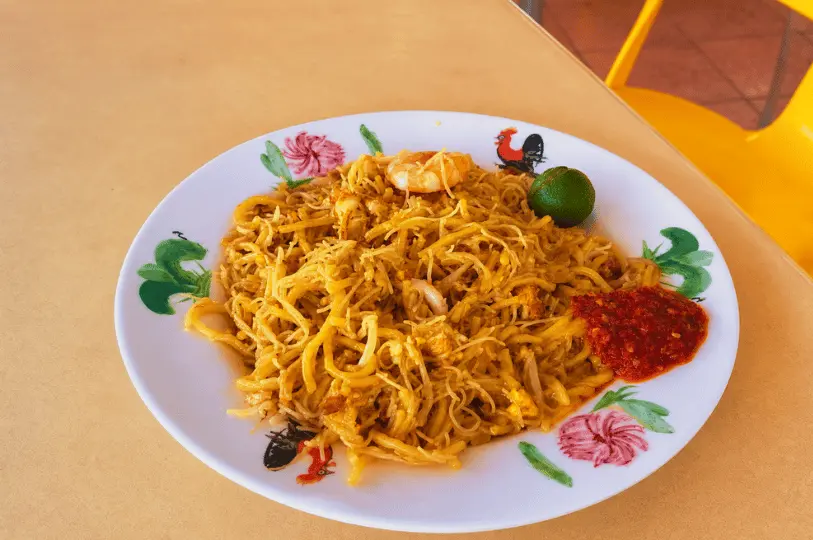
Where to find it: Golden Mile Food Centre, 505 Beach Road, #B1-34, Singapore 199583
Getting there: Nicoll Highway MRT, about a 7 minute walk according to a recent guide (older estimates put it closer to 10)
What to budget: Around S$5 for a standard portion
Down in the basement at Golden Mile Food Centre, this stall offers another take on dry Hokkien mee, but with a different personality from Nam Sing.
Yellow noodles and thin bee hoon come with prawns, pork belly, squid, egg, and stock, but the condiments give this plate its own character. There is sambal for depth, cut chilli for a sharper kind of heat, and calamansi to brighten everything up, so you can adjust the plate as you eat.
The plate keeps things old-school and distinctly dry, with the stock absorbed into the noodles rather than left pooling underneath. Pork belly and squid give it a little more substance, while the S$5 price keeps it easy on the money. It is a refreshing change if your idea of Hokkien mee leans away from the wetter, almost soupy versions.
You’ll like this if…
Dry-style fans, budget-conscious diners, breakfast or lunch, solo meals, and anyone already around Beach Road.
The trade-off
The wok hei is fairly restrained, the prawn stock stays on the milder side, and the portion may feel modest if you’re especially hungry. This is also not the place for a gravy-heavy plate; the appeal is very much in its drier style. Opening hours vary between listings, so it is safest to treat this as a daytime stop and check the current schedule before making a dedicated trip.
One thing I’d do
Don’t tip everything in at once. Try the noodles first, then add the sambal, cut chilli, and calamansi a bit at a time until it tastes the way you like it.
6. Xiao Di Fried Prawn Noodle: For Rich Stock and Extra Crispy Pork Lard
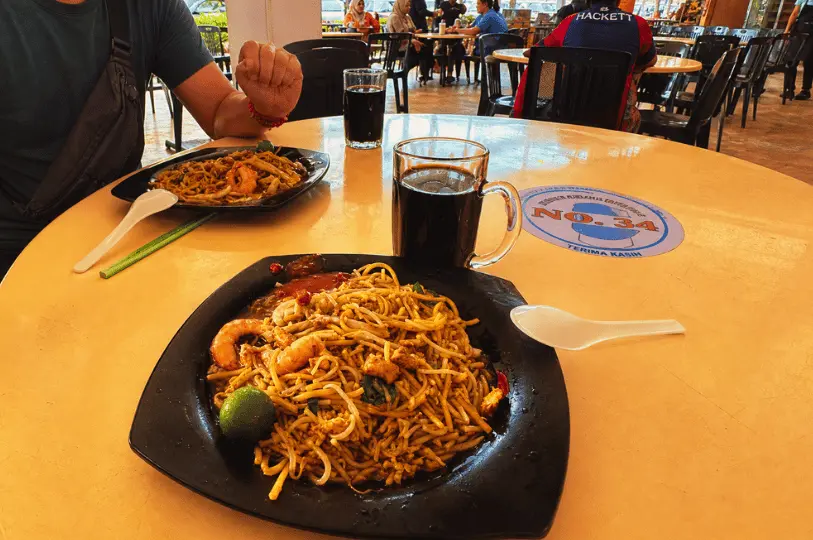
Where to find it: Guan Hock Tiong Eating House, 153 Serangoon North Avenue 1, #01-512, Singapore 550153
What to budget: About S$5 for a small and S$6 for a regular (dine-in)
Xiao Di is the list’s younger-generation counterpoint, and it isn’t shy about richness.
The style is distinctly wet, with yellow noodles and bee hoon soaking up a stock built from prawns and pork bones. Prawns, cuttlefish, pork belly, and egg give the plate plenty of substance without taking attention away from that rich, glossy base. The detail people talk about most, though, is the crispy pork lard. It’s so central that its current ordering menu even lists extra pork lard as an add-on, along with extra house-made chilli.
The wok hei comes through strongly, backed by sweet prawns, tender pork belly, and a rich stock that keeps the noodles soft without letting them turn soggy. The portion feels generous too. What really gives the plate its character, though, is the combination of house-made sambal and crispy pork lard.
You’ll like this if
Wet Hokkien mee lovers, a hearty lunch, solo diners, and Hokkien mee enthusiasts. Takeaway is also available.
The trade-off
This isn’t the place for a restrained or pork-free plate. The lunch window is short, roughly 10:30am to 2:30pm, and the most recent check shows it closed on Wednesday, though another listing says Monday. It also announced a short break in September 2026. If you’re crossing the town for it, check the stall’s latest post first.
One thing I’d do
Start with the standard fried Hokkien mee and the sambal. Add extra crispy pork lard only if you want it even richer. You can always go further next time.
Dry, Wet, or Smoky? A Quick Guide to Fried Hokkien Mee Styles
Before the list, it helps to know what you’re choosing between.
Dry style. The stock is mostly absorbed or reduced during cooking. Expect yellow noodles and bee hoon that hold more separation, with little visible gravy pooling underneath. Nam Sing and Hainan Fried Hokkien Prawn Mee lean this way.
Wet style. More stock stays with the noodles, so the plate turns moist and sometimes slightly soupy. Xiao Di and Singapore Fried Hokkien Mee sit here.
Charcoal-fired. Here the fuel itself becomes part of the dish. Swee Guan still fries over charcoal, which adds a smoky edge to the noodles and stock.
And then there’s Hong Heng, which sits comfortably in the middle: not too wet, not too dry, with the seafood doing a lot of the talking.
None of these is “correct.” They’re just different answers to the same craving.
A few habits help no matter where you go. Check hours before a dedicated trip, because several of these stalls have conflicting or shifting schedules. Bring cash, especially for Nam Sing.
And budget time for the queue. At most of these stalls, it’s part of the deal. And if the weekend starts stretching beyond hawker centres, there’s always the best restaurants in singapore that deserve a spot on your dining list for the sit-down part of the plan.
The Best Plate Is the One You Prefer
Hokkien mee is one dish with many personalities.
One stall lets the stock disappear into the noodles. Another keeps it pooled and glossy. One fries over charcoal, the slow way. Another stays open long after the lunch crowd has gone home.
So the real question isn’t which stall is best. It’s which plate sounds like yours. Maybe it’s the one you grew up with. Maybe it’s the one you haven’t met yet.
Pick a style. Join a queue. Squeeze the calamansi. Then decide for yourself.